The Science of Evaporative Cooling
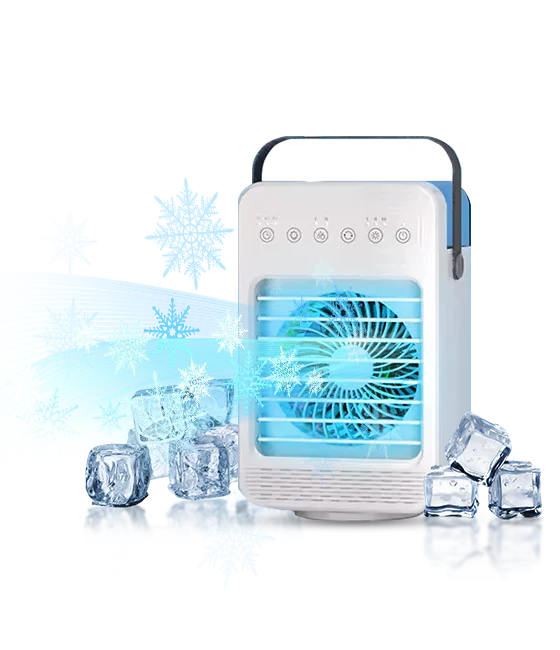
Unlike traditional air conditioners that use heavy, power-hungry compressors to pump chemical refrigerants (like Freon) through metal coils, the **CoolJet** operates on the basic thermodynamic principle of **evaporative cooling**. When liquid water transitions into vapor, it absorbs thermal energy from its immediate surroundings. By atomizing water droplets into micro-fine mist via ultrasonic transducers, CoolJet maximizes the contact area between hot air and moisture.
When the fan forces hot, dry indoor air through this mist stream, the air temperature drops instantly as the water vaporizes. This method consumes only a fraction of the electricity required by compressor-based systems—making it an eco-friendly and highly cost-effective option for personal zoning comfort.
Why the 5-Port Design is a Game Changer
Most basic evaporative coolers on the market only contain a single misting nozzle. This often limits their performance, leaving you with dry filters and minimal cooling radius. CoolJet's linear 5-port array ensures a wider, more consistent distribution of cooling vapors.
Depending on your room's relative humidity, you can selectively control the mist output. In highly dry climates (such as desert regions or heated winter rooms), activating all 5 ports acts as a high-output humidifier, restoring moisture to the air and relieving nasal congestion. In moderately humid spaces, activating 1 or 3 ports provides the ideal balance of cooling without overloading the air with moisture.
Common Myths About Portable Coolers
Myth 1: Evaporative coolers can cool down a whole apartment. This is completely false. A personal cooler like CoolJet is designed strictly for **close-range personal cooling**. It creates a comfortable zone of about 3 to 5 feet directly in front of the output grill. If you expect it to lower the temperature of an entire bedroom or living room, you will be disappointed.
Myth 2: Adding ice cubes does not help. In fact, adding ice cubes to the 600ml tank lowers the water temperature dramatically. This results in the mist output being significantly colder than when using room-temperature tap water. We recommend filling the tank with 50% ice cubes and 50% cold water for the best cooling performance.
Myth 3: You can run them in a sealed room. Evaporative cooling relies on a steady flow of fresh, dry air to absorb moisture. If you place CoolJet in a tiny, completely sealed room, the humidity will rise until the air is saturated, which halts the evaporative cooling process. For optimal results, keep a window or door slightly open to maintain active cross-ventilation.
Energy Efficiency & Portable Versatility
A steady window AC unit consumes between 500 to 1,500 watts of electricity per hour, while central air systems can exceed 3,500 watts. CoolJet runs on a standard 5V/2A input, consuming only **10 watts** at maximum fan and mist settings. This means you can run it all day for pennies.
Furthermore, because it is USB-powered, it is not tethered to wall outlets. You can plug it into a portable power bank and carry it to your backyard patio, use it in a tent while camping, or keep it running in your car during road trips.
Best Applications & Operational Limits
- Bedside Nightstand: Quiet fan speed and LED color cycles make it perfect for comfortable sleeping.
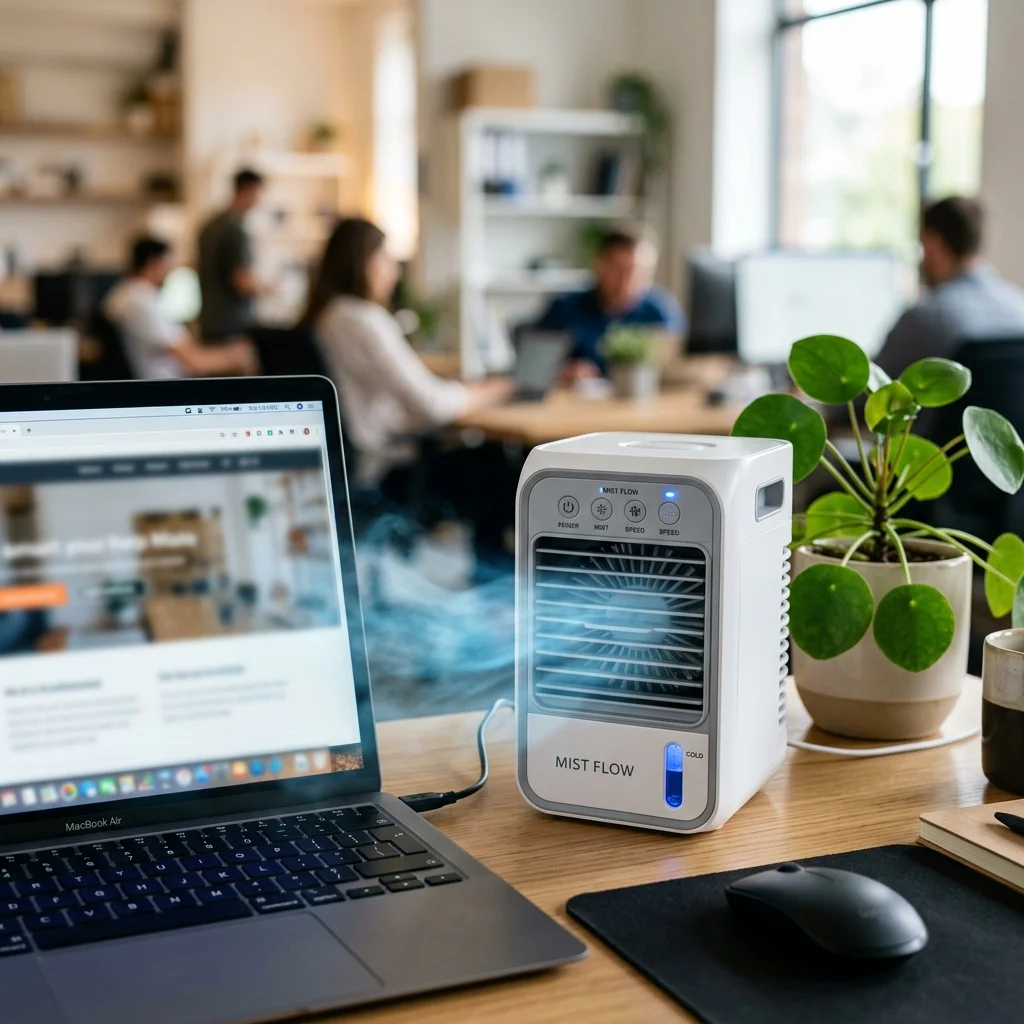
- Office Desks: Cools your workspace without disturbing co-workers or blowing loose papers.
- Outdoor Patios: Provides a cool mist zone on hot summer afternoons.
- Limitations: Evaporative coolers perform best in low-humidity environments (relative humidity under 60%). In extremely humid, tropical climates, the air's moisture-carrying capacity is limited, which slightly reduces the cooling intensity.